
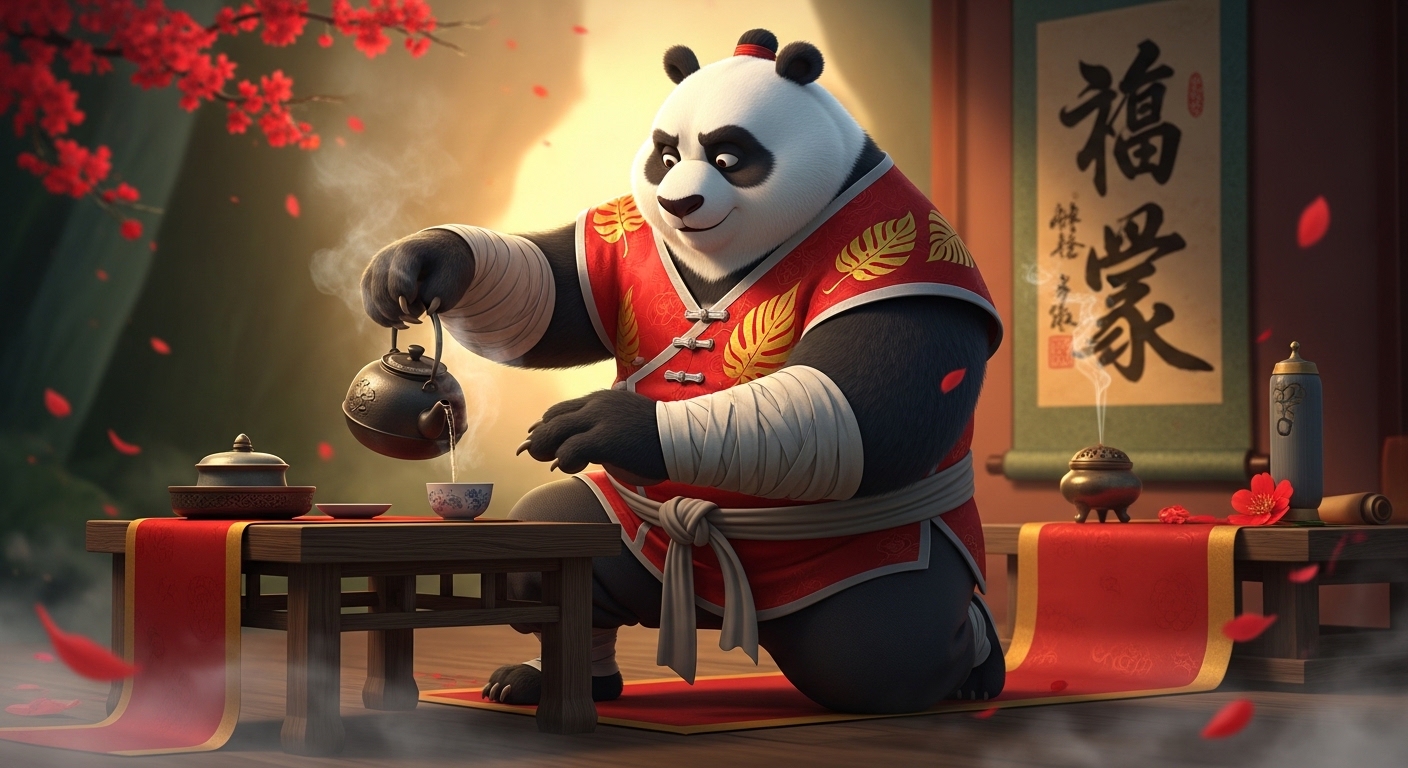
The link between tea and combat is older and deeper than most people realize — and the ritual still has something to teach us today.
The Surprising Connection
Tea ceremony looks, to outsiders, like the opposite of combat. Slow. Precise. Decorative. But both Chinese martial schools and Japanese samurai culture treated tea ceremony as essential training for warriors. The link was not superstition. It was a recognition that the state of mind you cultivate before a fight is the state of mind that fights. Tea ceremony was a meticulous, twenty-minute drill in focused attention, performed under social observation, with small consequences for small errors. It was combat preparation disguised as hospitality.
What the Ritual Actually Trains
Every step of the ceremony — the cleaning of the bowl, the measuring of the leaves, the pouring of the water, the offering of the cup — has specific, precise motions that must be executed without hurry and without wasted movement. This is the same quality a warrior needs in the moment of engagement. Economy. Presence. The absence of extra. A practitioner who can perform a tea ceremony cleanly has demonstrated a kind of attentional control that transfers, very directly, into the moment when a blade is drawn.
The Modern Application
You do not need tea to practice this. Pick one small, repeatable daily ritual — making coffee, folding a shirt, preparing dinner — and turn it into a ceremony. No phone. No radio. No multitasking. Full attention to every micro-movement. Fifteen minutes is enough. What you are training is not the ritual; it is the capacity to be fully present while doing something ordinary. That capacity then shows up in the moments that matter. The warrior’s tea is the entry drill for the warrior’s focus.
Why Small Rituals Matter
Modern life aggressively opposes rituals. Everything is optimized, sped up, multitasked into a blur. To cultivate a single daily act of deliberate slowness is a quiet rebellion, and it produces effects far beyond its obvious footprint. You become someone who can land, on command, in the present moment. That is a warrior’s skill whether or not you ever face combat. The tea is not the point. The attention it teaches is. Keep one ritual sacred. The rest of your life will organize itself around that one still point.
This article is offered for reflection and self-study. The Way is walked, not read — take what resonates, test it in your own practice, and leave the rest.