

Tag: meditation

  • Ink, Brush, Breath: The Meditative Path of Chinese Calligraphy

    Ink, Brush, Breath: The Meditative Path of Chinese Calligraphy

    Calligraphy in the Chinese tradition is not handwriting — it is meditation with a brush, and one of the clearest mirrors of your inner state.

    The Practice and What It Really Is

    Chinese calligraphy is often mistaken for decorative writing. It is not. It is one of the most demanding contemplative disciplines in the tradition — a full-body practice in which every stroke of the brush carries the condition of the calligrapher at the moment of its making. A shaky hand shows a shaky mind. A rushed exhale shows a rushed thought. The paper is a diagnostic of your inner state, and that is precisely why the masters used it for self-study, not just for artistic output.

    Why the Brush Is So Revealing

    Unlike a pen, a brush has no forgiveness. Every variation in pressure, angle, speed, and breath registers on the page. You cannot fake it. A master’s stroke is not decorative — it is the clean externalization of a mind that has been trained to land fully in the present moment, on command. Thirty minutes of serious calligraphy practice will show you more about your current state of attention than an hour of conversation or a whole day of scrolling. The brush does not lie.

    How to Begin Without Buying Anything

    You do not need traditional materials to start. A simple water brush and a blank pad are enough, or even a pencil held lightly with a full breath. Choose one character, one word, or one line. Draw it slowly, breathing deliberately with each stroke. Notice the moments your hand wants to speed up; those are the moments your mind is escaping the present. Slow back down. Finish the stroke. Over weeks, your hand and mind will begin to sync. That synchronization is the real prize, not the calligraphy.

    The Lesson for Everything You Do

    Calligraphy is a metaphor as much as a practice. Every action you take during the day is a brush stroke on the paper of your life. Rushed strokes accumulate. Distracted strokes compound. Full, present strokes build something legible and beautiful over time. You will not become a master calligrapher in a month. But you will, if you sit with the brush even briefly, stop being able to ignore the quality of your own attention. That is a door the masters opened for you a long time ago.

    This article is offered for reflection and self-study. The Way is walked, not read — take what resonates, test it in your own practice, and leave the rest.


  • When Your Mind Is a Battlefield, Surrender Is the Sharpest Sword

    When Your Mind Is a Battlefield, Surrender Is the Sharpest Sword

    Every warrior eventually learns that the fight against the mind cannot be won by fighting — and the counter-intuitive path that actually works.

    The Fight You Cannot Win by Fighting

    Most meditators begin the same way. They notice a distracting thought, they try to push it away, a new one arrives, they push again, a third one arrives, and within thirty seconds they are exhausted and convinced they are failing. This is the fight against the mind, and it is unwinnable — because the fighter and the fought are the same thing. Every push produces a reciprocal pull. The more you struggle, the deeper you tangle. The old masters saw this problem millennia ago and found a different door.

    The Door That Opens the Other Way

    The door is surrender. Not giving up — surrender. You stop trying to make the thoughts leave. You allow them. You watch them arrive, dwell, and dissolve, without intervening. To the ego, this looks like losing. It is actually the sharpest move available. Thoughts, denied the resistance they feed on, run out of energy faster than you can fight them. You have traded a losing war for a winning peace, and the prize is a mind that is finally quiet without having been forced.

    How to Practice

    Next time you sit, try this. Instead of returning to the breath the moment a thought arises, say quietly to yourself: ‘welcome.’ Let the thought speak. Do not argue. Do not agree. Just listen. Notice that it gets bored within seconds and evaporates. The mind is not your enemy. It is a child asking to be acknowledged, and once acknowledged, it usually walks off. Surrender is, paradoxically, the technique that the advanced student arrives at after years of trying everything more dramatic.

    The Life Application

    This lesson extends beyond meditation. The emotion you cannot outrun. The grief you cannot out-work. The self-criticism you cannot silence. Each of them responds to the same inversion. Welcome the thing. Let it speak. Do not fight. You will find, as every old master eventually found, that what you stop fighting often stops fighting you. Surrender is not a white flag. It is the sharpest sword, and it is in your hand the whole time.

    This article is offered for reflection and self-study. The Way is walked, not read — take what resonates, test it in your own practice, and leave the rest.
  • Sitting in Stillness: Why Doing Nothing Is the Hardest Practice

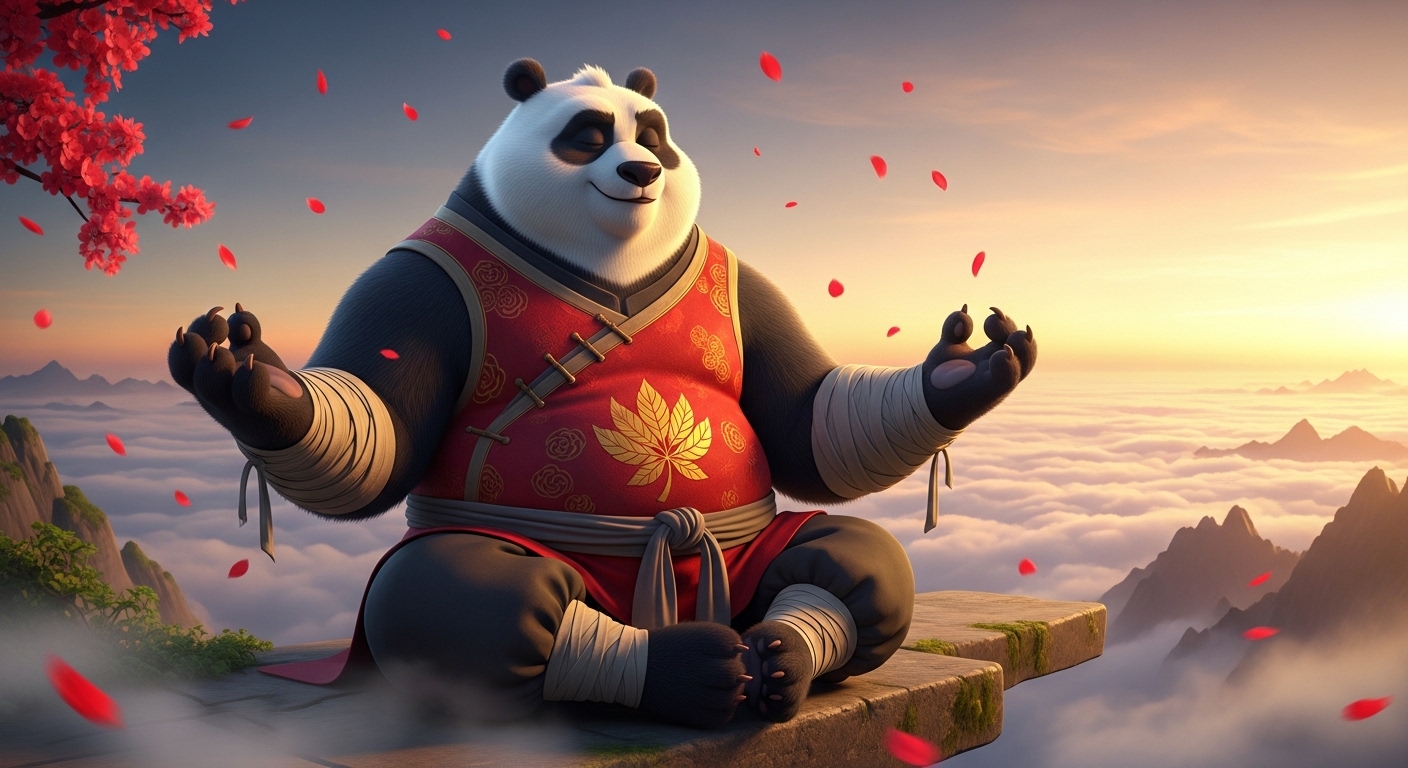
    Sitting in Stillness: Why Doing Nothing Is the Hardest Practice

    Everyone thinks they want to do nothing. Ten minutes of real nothing, and most people will beg for a task. Why stillness is the final frontier.

    The Illusion of Laziness

    When people say they want to ‘do nothing,’ they almost always mean they want to do something pleasant and easy — lie on a couch with a phone, drift through a Sunday. That is not doing nothing. That is consuming gently. Real doing nothing — sitting with your back straight, eyes closed, no input, no task, no media — is a discipline so demanding that most adults in the modern world have never done it for more than a minute at a time. It is the hardest practice there is.

    Why It Is So Difficult

    The mind did not evolve to be still. It evolved to scan, categorize, predict. Asking it to do nothing is asking a predator to lie down next to its dinner. The resistance you feel in the first five minutes is not a character flaw. It is your nervous system protesting a condition it was not designed for. Naming that makes it easier to stay. You are not doing it wrong. You are doing exactly what every person in history has done the first time they tried.

    The Reward on the Other Side

    If you keep showing up — ten minutes, daily, for weeks — a second phase begins. The resistance does not disappear, but it gets quieter. You begin to land, briefly, in moments of actual stillness. These moments are not fireworks. They are small, almost anticlimactic, and very quietly addictive. You realize, for perhaps the first time, that your baseline state is not the busy one. The busy one is what you have been doing. The still one is what you have been.

    A Promise You Can Keep

    Do not commit to an hour. Commit to ten minutes, first thing, before the phone. Sit upright somewhere comfortable. Close your eyes. Do not meditate — do not follow the breath or chant or count. Just sit. When the urge comes to get up, notice it and do not act on it. When the timer ends, get up calmly. Over a month, this quietly rearranges your relationship with your own mind, and there is no other intervention that can produce that result for free.

    This article is offered for reflection and self-study. The Way is walked, not read — take what resonates, test it in your own practice, and leave the rest.
  • Mountain Mind: How Panda Masters Stay Unshakable

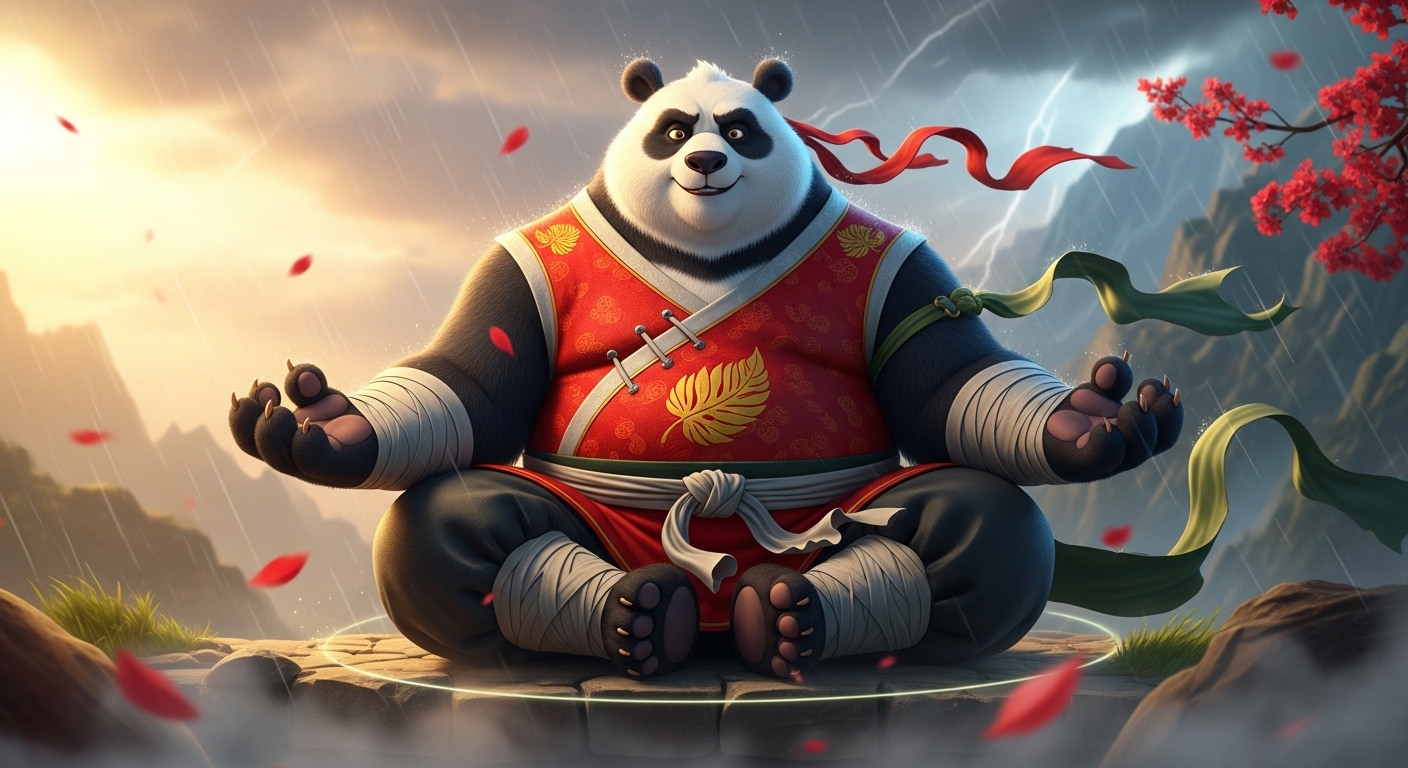
    Mountain Mind: How Panda Masters Stay Unshakable

    What the old monks meant when they spoke of ‘mountain mind’ — and how you build one without leaving your city apartment.

    The Image and What It Means

    The old texts describe the master’s mind as ‘like a mountain.’ Storms come. Seasons change. Clouds wrap and unwrap its peak. But the mountain itself does not move. This is not a metaphor for numbness or detachment — a mountain is not absent. It is fully present, fully here, and yet not displaced by what passes through its weather. That is the target. Most of us are not yet mountains. We are leaves, reacting to every small gust. The work is to deepen.

    What Produces the Mountain

    Three things, over time. First, long enough sitting meditation that you have watched a thousand emotions arise, peak, and dissolve without you doing anything. That experience teaches the mind, viscerally, that internal weather is weather — not identity, not truth. Second, repeated exposure to difficulty you have survived. Each survived storm deepens the root. Third, a quiet relationship with something larger than yourself — a practice, a tradition, a purpose — that makes your personal turbulence feel proportionate.

    How to Practice Toward It

    Sit for ten minutes each day, eyes closed, simply watching the breath. Do not try to stop thoughts. Notice them, let them pass, return to the breath. This looks boring. It is rewiring. Over months, your average emotional response time slows. You begin to see the flare before it becomes behavior. The gap between stimulus and response — Viktor Frankl’s famous space — widens. That widening is where the mountain grows. You cannot see it forming, but you can feel it later when a storm fails to move you.

    The Thing You Will Stop Doing

    You will stop being the person who is surprised by their own reactions. Mountain mind does not mean you stop having feelings. It means the feelings stop being news. You feel the anger, you feel the grief, you feel the desire, and none of it picks you up and throws you. That is what the old masters meant. That is what is available to you, given enough quiet repetitions. The mountain is not out there. It is the posture of attention you are building every time you sit.

    This article is offered for reflection and self-study. The Way is walked, not read — take what resonates, test it in your own practice, and leave the rest.

  • Inner Peace Is Not the Absence of Storm, But Stillness Within It

    Inner Peace Is Not the Absence of Storm, But Stillness Within It

    Real peace is not a quiet room — it is an unshakable center you carry into every loud, chaotic, demanding corner of your life.

    Rethinking What Peace Means

    Most people chase peace like a destination — a beach, a retreat, a weekend with the phone off. But the moment real life returns, the peace evaporates. This is the first great misunderstanding of the path. Peace is not the scenery around you. It is the posture within you. A master fighting for their life on a battlefield can have more peace than a tourist sunburning on a Sunday afternoon. Circumstance is the wind; peace is how deeply you have rooted.

    The Ancient Principle

    The old scrolls describe the mind as a pond. When the surface is still, every ripple is visible. When the pond itself is churning, nothing can be read. But — and this is the key — the depth of the pond never changes. The turbulence is always only on the surface. Your task is not to prevent the wind. It is to remember that you are the water underneath, not the waves on top.

    A Practice for This Week

    Each morning, before your feet touch the floor, sit up and take three slow breaths with your eyes closed. Notice — without trying to fix — whatever weather is already inside you. Tired? Anxious? Sharp? Blunt? The practice is not to change the weather. It is to become the one who can observe the weather. This tiny act, repeated, rewires your relationship with chaos.

    The Deeper Truth

    The warrior who finds peace only in silence has found half the prize. The warrior who can find it in the middle of a storm has found the whole one. Stillness is not the absence of motion. It is the stability from which all skilled motion flows. Build that center, and you will stop searching for peaceful places — you will bring peace with you.

    This article is offered for reflection and self-study. The Way is walked, not read — take what resonates, test it in your own practice, and leave the rest.