
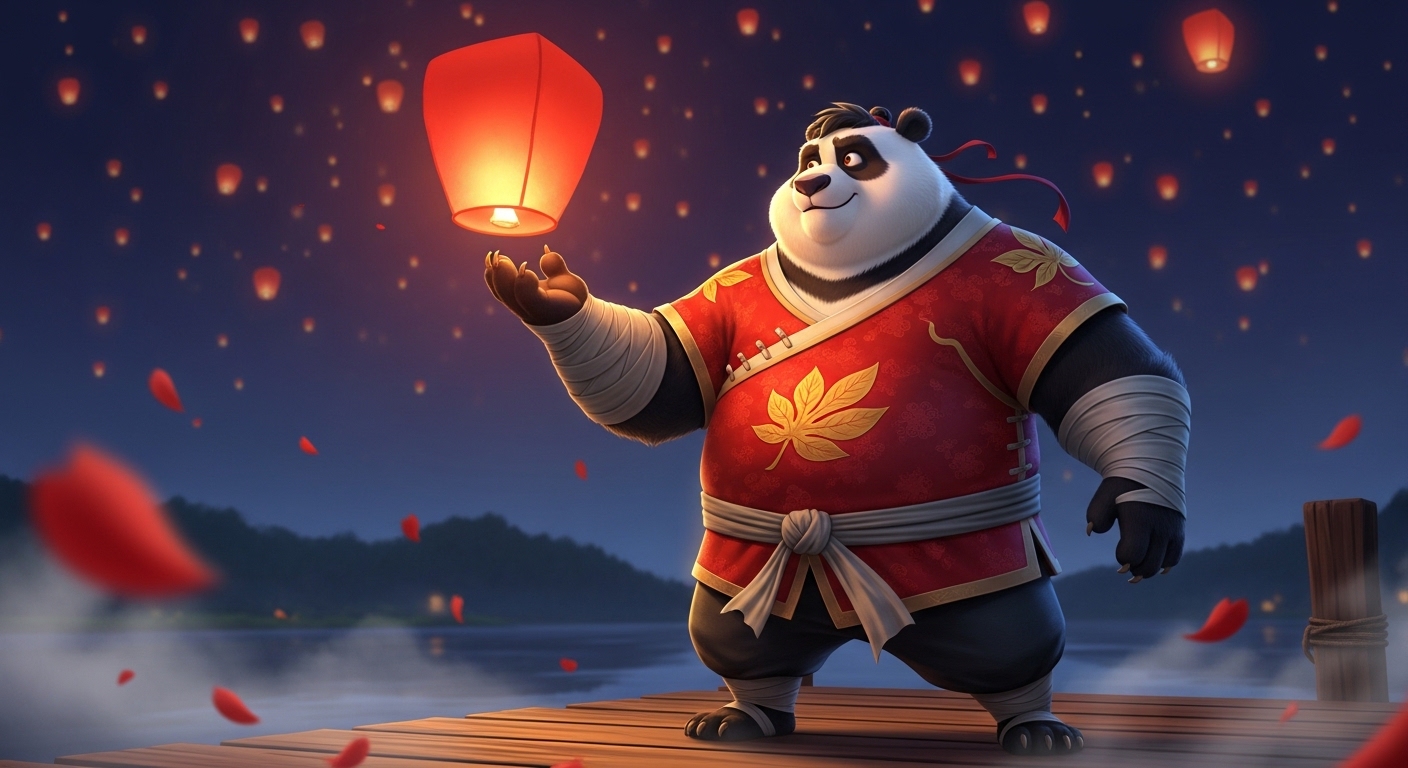
A two-thousand-year-old festival about light, release, and the old wisdom of putting something down so something else can begin.
The Festival Itself
The Lantern Festival marks the fifteenth day of the first lunar month, the end of the Chinese New Year period. Lanterns of every size are hung along streets and released into skies and rivers. Riddles are solved. Sweet rice dumplings are eaten. It looks like a celebration — and it is — but underneath the color is a much older ceremony: the formal closing of the previous year. You let the lantern go. You let what was, be finished. The festival is a culture-wide exercise in clean endings.
Why Clean Endings Matter
Most modern lives do not have clean endings. Projects trail into other projects. Relationships fade rather than finish. Years blur together. The nervous system, without ceremony, treats nothing as truly complete, and therefore nothing as truly beginning. This is why so many people feel low-grade exhausted without being able to name the cause. You are carrying every unfinished thing. A lantern festival, large or small, is a mechanism for formally releasing what is no longer yours to hold.
How to Create Your Own
You do not need to be in China on the correct lunar date. Choose a moment that matters to you — the end of a year, a project, a season. Write down what you are releasing. Burn the paper, or release it down a river, or float it in a lantern if you can. The ritual form is less important than the fact that you are performing one at all. The mind needs a formal event to mark a closure; otherwise, it keeps the file open indefinitely. Give it the event, and it can finally move on.
The Deeper Wisdom
The festival’s real teaching is that holding on is not always virtue. Some things are done. The lantern going up is a way of admitting that, physically, in the presence of witnesses. You will find, if you build this into your life even once a year, that the following season begins with a lightness you had forgotten was possible. Let it go. The light rises. The year begins. This is how cultures older than yours have always known to carry life without being crushed by its accumulation.
This article is offered for reflection and self-study. The Way is walked, not read — take what resonates, test it in your own practice, and leave the rest.