

Category: Modern Life

  • Turning Setbacks Into Training: The Stoic Panda Philosophy

    Turning Setbacks Into Training: The Stoic Panda Philosophy

    Every setback is either a wound or a curriculum. The old masters figured out which one you get to choose, and how to choose correctly.

    The Two Readings of Every Setback

    A setback can be read two ways. The first reading is wound — something that happened to you, unfair, unjust, painful. The second reading is curriculum — something that happened for you, teaching something you could not have been taught any other way. The event itself is neutral; you get to pick which reading you apply. The Stoics knew this, the Buddhists knew this, the old kung fu masters knew this, and the modern person, drowning in self-pity media, often does not. Pick the better reading. It will save your life.

    Why the Curriculum Reading Is Not Delusion

    This is not toxic positivity. The setback was still painful. The loss was still real. But the story you tell about it determines what you can extract from it. The wound reading produces a victim; the curriculum reading produces a student. Both readings are honest. Only one is useful. The masters did not deny suffering — they studied it. They sat with it, looked at it from angles, and asked: what does this teach? That question alone is the difference between someone who collapses and someone who compounds.

    How to Actually Do It

    When the next setback arrives, and it will, do this. First, let yourself feel the thing, fully, for a bounded time — an hour, a day. Grief is not optional and cannot be skipped. Second, when the time is up, sit down with pen and paper and write: what is the curriculum here? Do not answer quickly. Do not moralize. Just look. Five things always emerge. Maybe you needed to learn to ask for help earlier. Maybe you had a blind spot about a relationship. The setback sees you more clearly than you see yourself. Let it teach.

    The Long-Term Effect

    A life lived with the curriculum reading looks different. The person becomes hard to destabilize, not because bad things stop happening — they do not — but because each bad thing is metabolized rather than stored. Over decades, this produces a different kind of human. Calm, layered, unexpectedly generous, hard to throw. You can be that human. It is not a talent. It is a reading, applied repeatedly, until it becomes the default. Setback becomes training. Training becomes mastery. Mastery becomes peace.

    This article is offered for reflection and self-study. The Way is walked, not read — take what resonates, test it in your own practice, and leave the rest.


  • Digital Detox as Spiritual Training: The Monk’s Modern Path

    Digital Detox as Spiritual Training: The Monk’s Modern Path

    Monks once fasted from food. In this era, they would have fasted from screens — and here is why that is exactly the practice you need.

    Why This Is the New Fast

    For most of human history, the hardest thing to set down was food. Monks fasted because food was the most insistent source of distraction from deeper states. In this era, food is everywhere and mostly manageable. The insistent distraction is the screen. Not just the phone — the laptop, the television, the smart watch, the notification at the periphery of vision. If the old monks were alive today, they would not be fasting from rice. They would be fasting from the glass rectangle, because it is the modern mind’s most relentless feeder.

    What a Real Detox Looks Like

    A weekend of ‘less scrolling’ is not a detox; it is rationing. A real digital detox is a set period — 24 hours, 72 hours, a week — with no phone, no laptop, no television, no streaming, no podcasts. Books are allowed. Paper is allowed. Conversation, walking, cooking, sleep. The first day is uncomfortable in the same way the first day of a food fast is uncomfortable. The second day, something softens. By the third day, your attention span has lengthened measurably, and you realize how compressed it had become.

    The Return to Ordinary Pleasures

    The most striking effect of a long digital detox is not the absence of anxiety — though that happens. It is the surprising return of ordinary pleasures. Food tastes more. Conversations feel richer. A walk is actually a walk, not a backdrop for a podcast. The baseline of your enjoyment rises dramatically because it has not been numbed by constant micro-stimulation. This is what the old monks meant when they spoke of austerity producing joy. The deprivation is not the point. What returns when the noise stops is.

    How to Schedule One

    Block one full weekend, soon. Put the phone in a drawer Friday night. Tell the people who need to reach you in case of emergency that you will be offline. Then simply be. You do not need to do anything spiritual. Read, cook, walk, sleep, sit. Monday morning, you will return to the digital world with a new baseline — the sharp awareness of how much of your attention had been leased to screens without your consent. That awareness is worth the weekend, many times over.

    This article is offered for reflection and self-study. The Way is walked, not read — take what resonates, test it in your own practice, and leave the rest.

  • Parenting Like a Kung Fu Master: Patience, Presence, Precision

    Parenting Like a Kung Fu Master: Patience, Presence, Precision

    The three qualities that separate great teachers from frustrated ones — and why they are the same three you need with your kids.

    The Surprising Overlap

    A kung fu master teaching a seven-year-old and a parent raising one are, at the skill level, doing exactly the same job. Both are attempting to install values, habits, and capacities in a small human whose attention span is short and whose emotional regulation is under construction. The master’s tools and the parent’s tools are more similar than most parenting books acknowledge. Three qualities carry almost all the weight: patience, presence, and precision. Master those three and most of the rest of parenting takes care of itself.

    What Each One Means

    Patience is not the absence of annoyance. It is the capacity to continue teaching well in the presence of annoyance. Presence is not being in the same room. It is being without phone, without agenda, without performance — giving the child the rare experience of being the only thing that currently exists for you. Precision is the discipline of choosing, out of the fifty things you could correct, the one that matters today. Most parents correct everything and therefore nothing. Masters correct one thing, well, and let the rest go for now.

    Where Most of Us Fall Short

    The hardest of the three, for most modern parents, is presence. We are exhausted, scattered, and conditioned to split our attention. The phone is the defining artifact of this era’s parenting failure. Children do not need all of you, all the time. They need some of you, fully, regularly. Twenty minutes of phone-down, eye-level, undistracted presence will outweigh five hours of half-attention. The kids know the difference. They always know the difference. Train yourself to offer the concentrated kind at least daily.

    The Long Game

    You are not raising a well-behaved child this week. You are raising a sovereign adult over two decades. That reframe changes everything. A master does not teach a student the form on day one; they teach them how to learn, how to persist, how to fail. A parent, at their best, does the same. Patience. Presence. Precision. Repeated over years, these three make you a teacher your child will, later in life, recognize as one of the lucky ones they had. That is the target. It is reachable.

    This article is offered for reflection and self-study. The Way is walked, not read — take what resonates, test it in your own practice, and leave the rest.
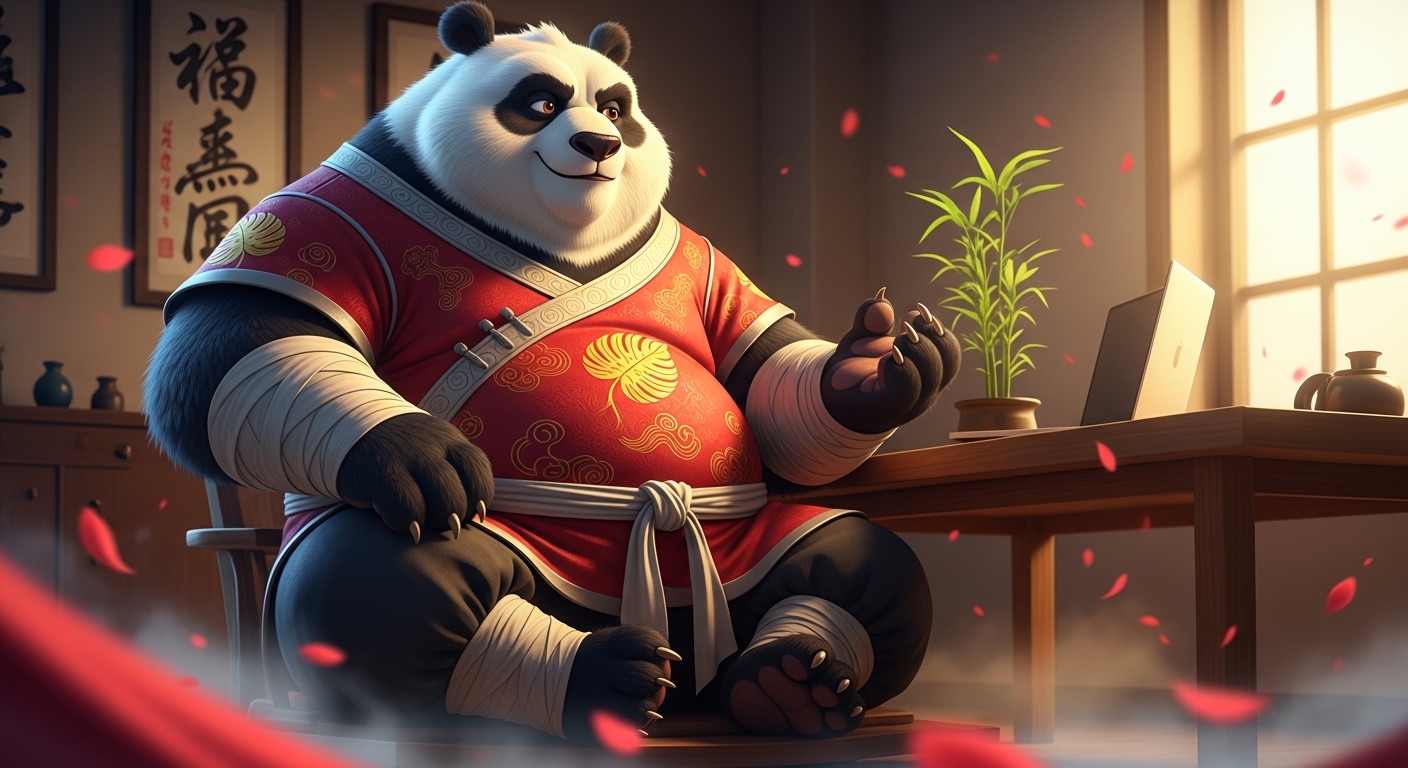
  • The Entrepreneur’s Guide to the Warrior Mindset

    The Entrepreneur’s Guide to the Warrior Mindset

    What the founder and the fighter have in common — and the specific mental habits that separate the ones who survive from the ones who quit.

    The Founder Is a Fighter

    Starting a company is not metaphorically a fight. It is a literal, prolonged, adversarial contest with market forces, competitors, investors, employees, and your own psychology. Most of the people who try it quit within two years. The ones who survive share a specific set of mental habits that are indistinguishable from the habits of career warriors in much older traditions. Understanding those habits, before the fight starts, is the difference between being prepared and being improvised.

    Four Habits That Actually Matter

    One: accept that every day will contain at least one small defeat. If you are not losing something daily, you are not trying hard enough. Two: treat emotional volatility as noise, not signal. Feelings come and go; the position holds. Three: study your opponent, not your product. Customers, competitors, and your own cognitive biases are the actual battlefield. Four: cultivate the long horizon. The founder who thinks in years outlasts the one who thinks in quarters, every time, without exception.

    The Dangerous Myths

    The entrepreneurial media sells three lies. The first is that hustle is a virtue; it is a symptom of bad strategy. The second is that passion sustains you; it does not — discipline does, long after passion has burned off. The third is that the market loves a visionary; the market loves a survivor, and survival is an accumulation of boring, correct decisions made while everyone else is dramatic. Strip out these myths early. They are the things that get young founders killed.

    The Warrior’s Long View

    The best founders you will meet are shockingly calm people. They have been through enough engagements to know that the dramatic crises are temporary and the slow attrition is what actually matters. Build that calm on purpose. Meditate, sleep, move, read. Do not romanticize the grind. Your job is to be the last person in your market still standing in ten years, and the person who does that is not the loudest one. It is the one who treated it like a warrior treats a campaign. Slowly. Soberly. And without ever losing the long view.

    This article is offered for reflection and self-study. The Way is walked, not read — take what resonates, test it in your own practice, and leave the rest.

  • How to Bring Dojo Discipline Into Your 9-to-5 Workweek

    How to Bring Dojo Discipline Into Your 9-to-5 Workweek

    A practical protocol for translating the habits of the training hall into the realities of a cubicle, laptop, or kitchen table.

    The Core Translation

    The dojo and the office do not look alike, but their underlying skills rhyme. The dojo rewards presence, repetition, cleanliness of form, and the ability to begin again after every failure. The office rewards exactly the same qualities, minus the uniforms and ritual bows. Most people fail at work for the same reasons they would fail at a martial art — they chase novelty, avoid repetition, and drop the practice the moment it gets boring. The fix is identical. Bring dojo habits to your workday. The results are unfair.

    The Six-Point Protocol

    First, one uniform — a consistent morning routine that signals work has begun. Second, one bow — a one-minute meditation at your desk before the first task, to arrive fully. Third, one form — a fixed sequence of opening tasks in the same order every day, to bypass willpower. Fourth, one opponent — one hard task per day, tackled before anything easy. Fifth, one break — one real lunch, away from screens, every single day. Sixth, one bow out — a close-down ritual that formally ends the day. Six small disciplines. Weeks of compounding.

    Why It Actually Works

    The reason corporate advice fails is that it does not train the nervous system; it only gives the conscious mind more to-do lists. Dojo habits work because they teach the body to associate certain rituals with certain states. Your morning routine triggers work mode, just as a gi triggers training mode. Your close-down ritual triggers rest, just as a bow out ends the session. Over weeks, you stop needing willpower because the environment itself is doing the work. That is the whole secret.

    Starting This Week

    Pick two of the six points above and install them this week. Just two. Write them down. Do them without exception for five workdays. Notice what happens to your focus, your energy, and your ability to stop thinking about work in the evening. Next week, add one more. By the end of a month, you will have a workday with the structure of a training session — and the output difference between a structured week and an unstructured one will, quite quickly, stop being subtle.

    This article is offered for reflection and self-study. The Way is walked, not read — take what resonates, test it in your own practice, and leave the rest.
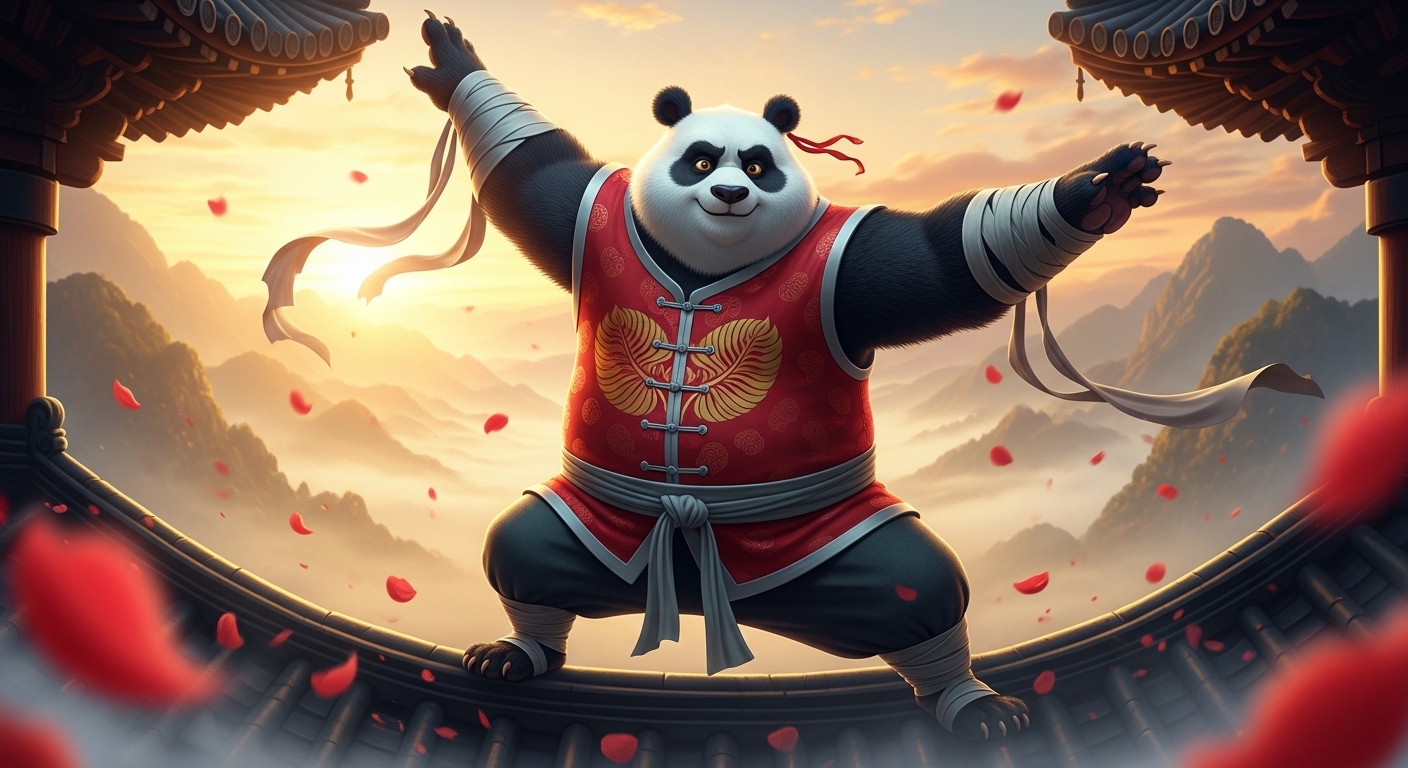
  • The Breathing Technique That Calms Panic in 60 Seconds

    The Breathing Technique That Calms Panic in 60 Seconds

    One minute, no equipment, no app. A breath pattern the old masters used before battle, now validated by modern physiology.

    The Pattern

    It is called four-seven-eight, and it was taught in the Shaolin tradition long before modern breathwork repackaged it. Inhale through the nose for four counts. Hold the breath for seven. Exhale slowly through the mouth for eight. That is one round. Four rounds is the full protocol. It takes about a minute. It works, every time, on nearly everyone. And it is free, which is why it is almost impossible to sell at scale and therefore almost always overlooked.

    Why It Works

    Panic is a feedback loop between mind and body. The mind perceives threat and the body responds with a shallow, rapid breathing pattern, which the mind then reads as further evidence of threat. The loop spins. The extended exhale of four-seven-eight breaks the loop by manually triggering the parasympathetic nervous system — the body’s brake pedal. Once the body downshifts, the mind has no physical evidence of threat to feed on. The panic deflates.

    When to Use It

    Before a difficult conversation. When you wake up at three a.m. with a racing heart. Between meetings that are stacking up. After receiving bad news, before replying. In the car in a parking lot when the day has not yet happened. The technique is a portable nervous-system reset, and once you have rehearsed it in low-stakes moments, it becomes reliably available in the high-stakes ones. Drill it when you are calm so it shows up when you are not.

    The Deeper Point

    The old masters understood that the breath is the only autonomic function under voluntary control, and therefore the doorway between the conscious and unconscious nervous systems. By taking charge of the breath, you take partial charge of the whole cascade downstream of it. This is not spiritualism; it is mammalian physiology with a four-thousand-year-old user manual. Use it. You already own the equipment.

    This article is offered for reflection and self-study. The Way is walked, not read — take what resonates, test it in your own practice, and leave the rest.

  • The Dawn Warrior: A 6 AM Kung Fu Ritual Anyone Can Do

    The Dawn Warrior: A 6 AM Kung Fu Ritual Anyone Can Do

    Fifteen minutes at sunrise — no equipment, no dojo, no excuses. The morning ritual that transforms the rest of your day.

    Why Dawn Matters

    The hours before the world wakes up are not just quieter; they are neurologically different. Your mind has not yet absorbed the day’s emails, arguments, and news cycles. Your body, stiff from sleep, is willing to be taught. Most of the world’s great warrior traditions trained at dawn, and it was not superstition. It was the practical recognition that the earliest hour is the most trainable, most honest, most yours. What you do at 6 a.m. shapes who you are at 6 p.m.

    The Fifteen-Minute Ritual

    Minute one to three: standing breath. Feet shoulder-width, knees soft, hands at belly. Breathe slowly into the lower abdomen, extending the exhale. Minute four to eight: joint rotations from head to toe. Slow circles at the neck, shoulders, wrists, hips, knees, ankles. Minute nine to twelve: three slow stances held for a minute each — horse, bow, empty. Minute thirteen to fifteen: silent stillness. Eyes soft, mind unemployed. That is the whole thing.

    What Changes When You Do It Daily

    The first week feels ordinary. The second week, your sleep deepens and you wake before the alarm. By the third week, your day has a different texture — less reactive, more deliberate. By the end of the month, something has shifted that you will struggle to articulate. The ritual is small. The effect is not. The smallness is the point: something this minor, done unfailingly, outperforms almost any larger intervention you could stack on top.

    Starting Tomorrow

    You do not need to be a kung fu practitioner to do this. You need fifteen minutes and enough self-respect to keep a small promise to yourself. Do not wait for a clean slate or a quiet week. Start on the messiest possible morning. The ritual earns its meaning in the unglamorous days, not the retreat ones. Dawn is coming whether you meet it or not. The dawn warrior is simply the person who decides to meet it on purpose.

    This article is offered for reflection and self-study. The Way is walked, not read — take what resonates, test it in your own practice, and leave the rest.

  • Wu Wei: The Art of Effortless Action for Modern Life

    Wu Wei: The Art of Effortless Action for Modern Life

    The Taoist principle of wu wei is not laziness — it is the elite performance state every athlete, artist, and fighter secretly chases.

    The Most Misunderstood Word in Chinese Philosophy

    Wu wei translates literally as ‘non-doing,’ and the word trips most Westerners at the first step. They hear it as passivity, quietism, a life of shrugs. It is none of those things. Wu wei is action so aligned with the grain of the moment that it costs nothing extra. A leaf falling. A master’s strike. A perfect sentence. Wu wei is the absence of friction, not the absence of motion.

    Where You Already Know It

    You have felt wu wei. It is the shot that left your hand before you thought about it. The conversation that flowed without effort. The chapter you wrote in one sitting. Athletes call it flow. Musicians call it the groove. Fighters call it being in the zone. It is the same state under different names — the moment when your skill, the situation, and your attention lock into one thing, and all three stop fighting each other.

    How to Train Toward It

    Wu wei cannot be forced; the forcing is exactly what destroys it. But it can be invited. First, over-train the fundamentals until they become automatic — you cannot flow through something you are still thinking about. Second, reduce inputs — flow is fragile and noise kills it. Third, narrow your focus to one task at a time with a clear enough purpose that your whole system can align behind it. Flow is what happens when there is no internal argument about what to do.

    Putting It to Work Tomorrow

    Pick one task you do daily that still feels like a grind. Commit to doing it, for one week, with no multitasking, no music with lyrics, no phone in reach. Notice what happens on day three or four. The task does not get easier; something inside you stops resisting it. That is the first taste of wu wei. Once you have tasted it, you will stop accepting friction as inevitable — and that changes everything.

    This article is offered for reflection and self-study. The Way is walked, not read — take what resonates, test it in your own practice, and leave the rest.