
Category: Mindfulness

  • Digital Detox as Spiritual Training: The Monk’s Modern Path

    Digital Detox as Spiritual Training: The Monk’s Modern Path

    Monks once fasted from food. In this era, they would have fasted from screens — and here is why that is exactly the practice you need.

    Why This Is the New Fast

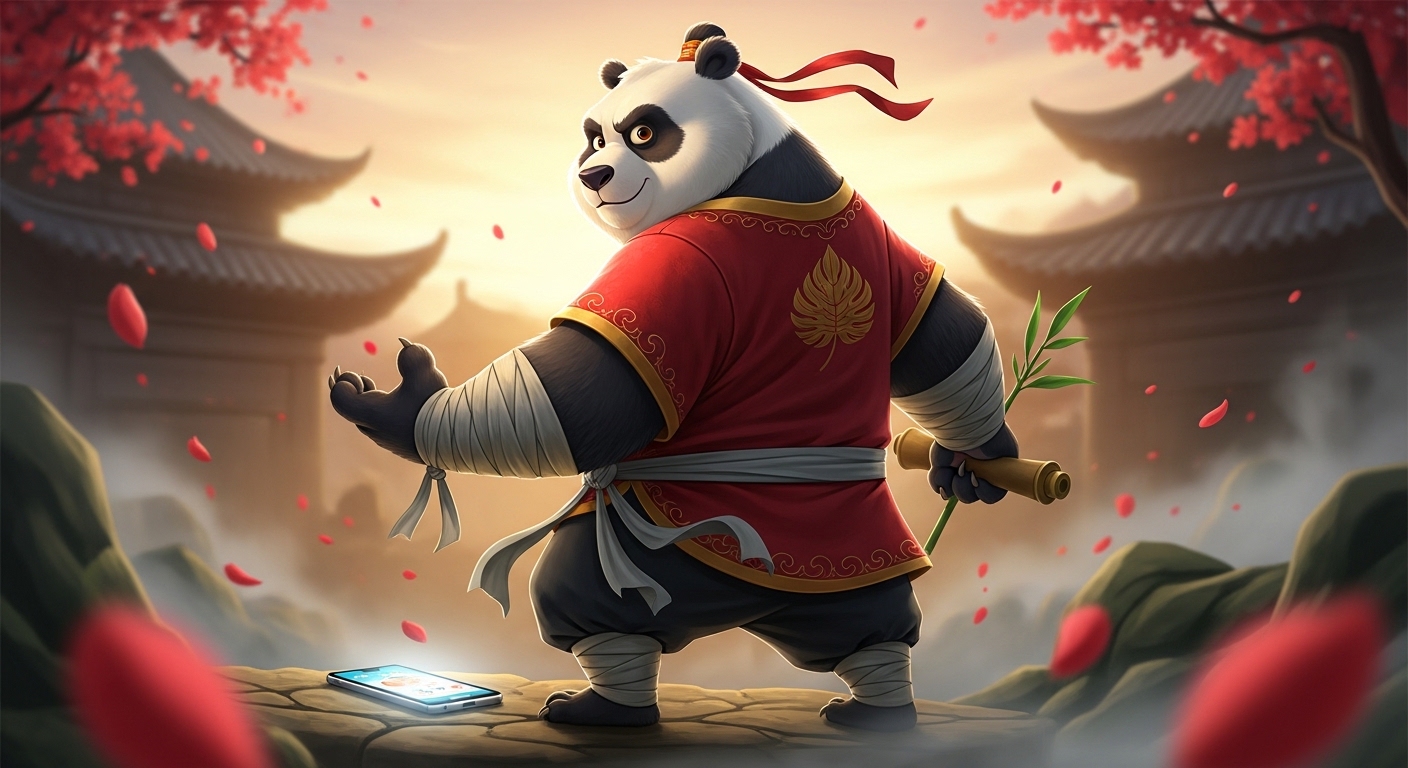
    For most of human history, the hardest thing to set down was food. Monks fasted because food was the most insistent source of distraction from deeper states. In this era, food is everywhere and mostly manageable. The insistent distraction is the screen. Not just the phone — the laptop, the television, the smart watch, the notification at the periphery of vision. If the old monks were alive today, they would not be fasting from rice. They would be fasting from the glass rectangle, because it is the modern mind’s most relentless feeder.

    What a Real Detox Looks Like

    A weekend of ‘less scrolling’ is not a detox; it is rationing. A real digital detox is a set period — 24 hours, 72 hours, a week — with no phone, no laptop, no television, no streaming, no podcasts. Books are allowed. Paper is allowed. Conversation, walking, cooking, sleep. The first day is uncomfortable in the same way the first day of a food fast is uncomfortable. The second day, something softens. By the third day, your attention span has lengthened measurably, and you realize how compressed it had become.

    The Return to Ordinary Pleasures

    The most striking effect of a long digital detox is not the absence of anxiety — though that happens. It is the surprising return of ordinary pleasures. Food tastes more. Conversations feel richer. A walk is actually a walk, not a backdrop for a podcast. The baseline of your enjoyment rises dramatically because it has not been numbed by constant micro-stimulation. This is what the old monks meant when they spoke of austerity producing joy. The deprivation is not the point. What returns when the noise stops is.

    How to Schedule One

    Block one full weekend, soon. Put the phone in a drawer Friday night. Tell the people who need to reach you in case of emergency that you will be offline. Then simply be. You do not need to do anything spiritual. Read, cook, walk, sleep, sit. Monday morning, you will return to the digital world with a new baseline — the sharp awareness of how much of your attention had been leased to screens without your consent. That awareness is worth the weekend, many times over.

    This article is offered for reflection and self-study. The Way is walked, not read — take what resonates, test it in your own practice, and leave the rest.
  • The Lantern Festival and What It Teaches About Letting Go

    The Lantern Festival and What It Teaches About Letting Go

    A two-thousand-year-old festival about light, release, and the old wisdom of putting something down so something else can begin.

    The Festival Itself

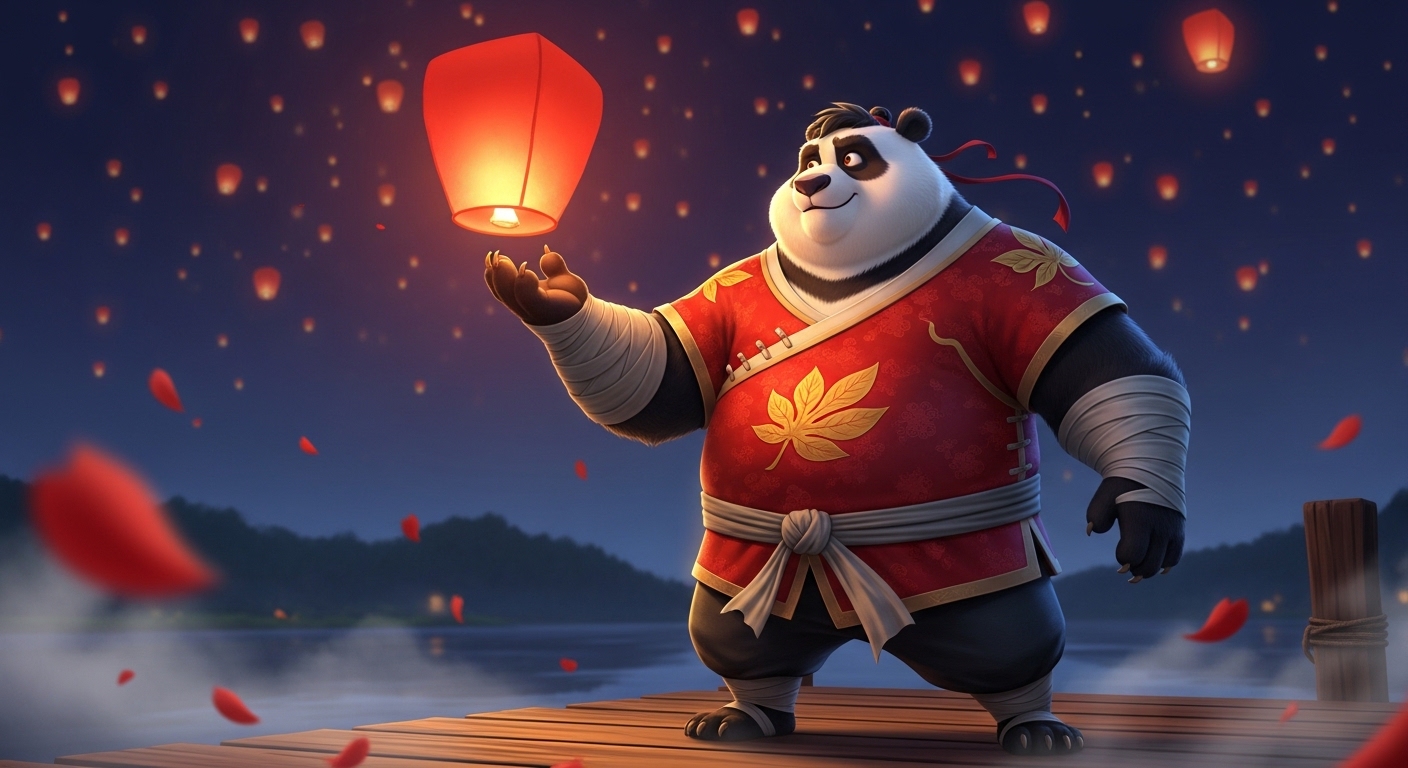
    The Lantern Festival marks the fifteenth day of the first lunar month, the end of the Chinese New Year period. Lanterns of every size are hung along streets and released into skies and rivers. Riddles are solved. Sweet rice dumplings are eaten. It looks like a celebration — and it is — but underneath the color is a much older ceremony: the formal closing of the previous year. You let the lantern go. You let what was, be finished. The festival is a culture-wide exercise in clean endings.

    Why Clean Endings Matter

    Most modern lives do not have clean endings. Projects trail into other projects. Relationships fade rather than finish. Years blur together. The nervous system, without ceremony, treats nothing as truly complete, and therefore nothing as truly beginning. This is why so many people feel low-grade exhausted without being able to name the cause. You are carrying every unfinished thing. A lantern festival, large or small, is a mechanism for formally releasing what is no longer yours to hold.

    How to Create Your Own

    You do not need to be in China on the correct lunar date. Choose a moment that matters to you — the end of a year, a project, a season. Write down what you are releasing. Burn the paper, or release it down a river, or float it in a lantern if you can. The ritual form is less important than the fact that you are performing one at all. The mind needs a formal event to mark a closure; otherwise, it keeps the file open indefinitely. Give it the event, and it can finally move on.

    The Deeper Wisdom

    The festival’s real teaching is that holding on is not always virtue. Some things are done. The lantern going up is a way of admitting that, physically, in the presence of witnesses. You will find, if you build this into your life even once a year, that the following season begins with a lightness you had forgotten was possible. Let it go. The light rises. The year begins. This is how cultures older than yours have always known to carry life without being crushed by its accumulation.

    This article is offered for reflection and self-study. The Way is walked, not read — take what resonates, test it in your own practice, and leave the rest.
  • The Moon-Gazing Ritual for Clearing a Cluttered Mind

    The Moon-Gazing Ritual for Clearing a Cluttered Mind

    An old contemplative practice used by Chinese poets and monks — simple, seasonal, and surprisingly effective on cluttered modern brains.

    The Practice in One Sentence

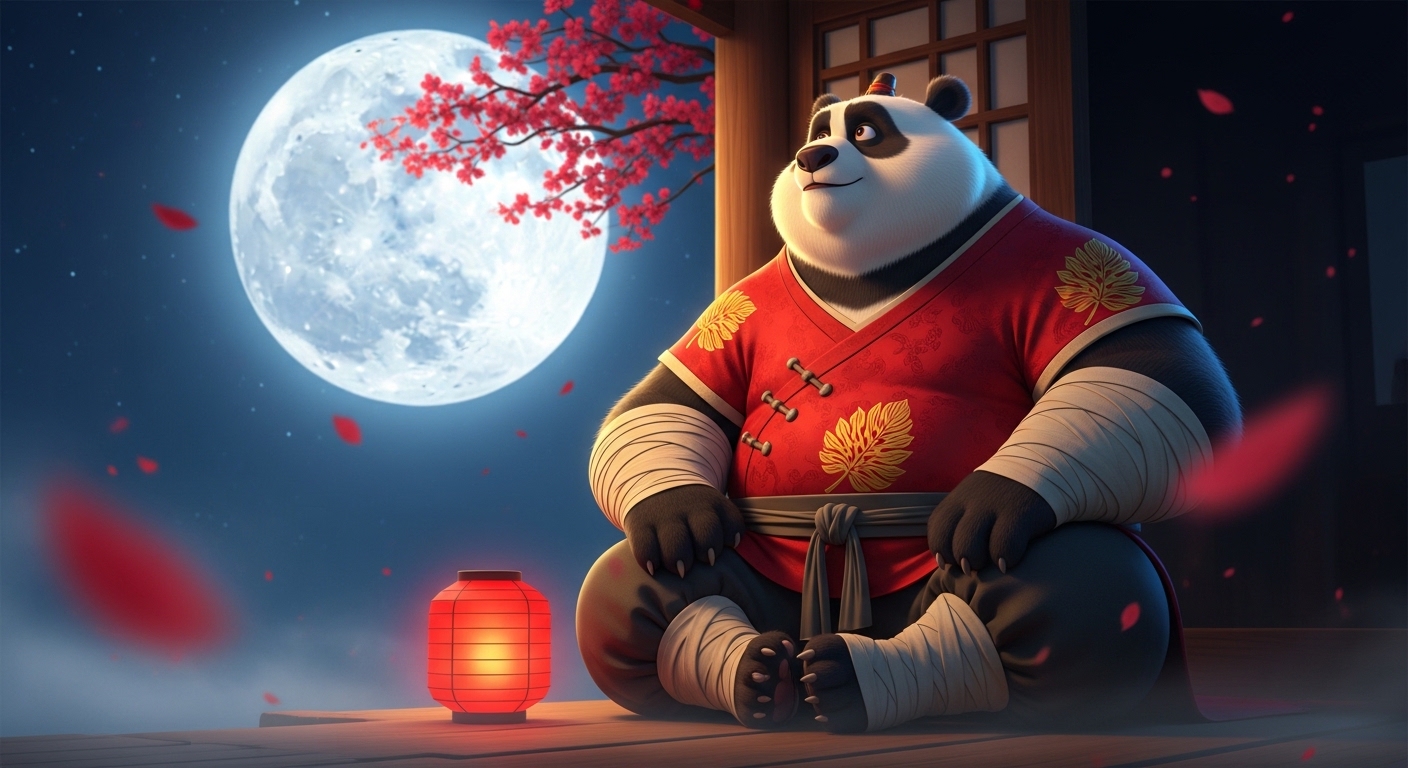
    You go outside on a night when the moon is visible. You sit, or stand, or lie down. You look at the moon — really look — for fifteen minutes, without your phone, without narration, without attempting anything. That is the whole practice, and it has been done under that same moon, by people very much like you, for at least two thousand years of continuous record.

    Why Moonlight Specifically

    The physiological answer is that moonlight is dim enough that your pupils dilate and your nervous system shifts into a quieter register than daylight allows. The psychological answer is that the moon is vast, silent, and not asking you to do anything — rare qualities in the modern visual field. The cultural answer is that the moon has been humanity’s most reliable companion for most of history, and nightly attention to it was once the default, not the rarity.

    What It Does to You

    The first time, you may feel mildly bored or mildly silly. The second or third, something shifts. Your mind, denied the usual evening stimulation, begins to unspool. Thoughts you did not realize you were holding surface and pass. You notice the quality of the air, the sound of your own breath, the faint movement of clouds. None of this is dramatic. All of it is recalibrating. You are, gently, being reminded that you are an animal in a landscape, not a user in an interface.

    How to Begin

    Check when the moon rises tonight. If it is visible from anywhere you can sit, go there. Fifteen minutes is enough. Do this weekly, not daily — let it remain a small ceremony rather than becoming another chore. Over months, you will begin to mark time by moons rather than meetings, and that alone will change something about how your mind lands in the world. The moon is free. It is showing up tonight whether you meet it or not.

    This article is offered for reflection and self-study. The Way is walked, not read — take what resonates, test it in your own practice, and leave the rest.
  • The Breathing Technique That Calms Panic in 60 Seconds

    The Breathing Technique That Calms Panic in 60 Seconds

    One minute, no equipment, no app. A breath pattern the old masters used before battle, now validated by modern physiology.

    The Pattern

    It is called four-seven-eight, and it was taught in the Shaolin tradition long before modern breathwork repackaged it. Inhale through the nose for four counts. Hold the breath for seven. Exhale slowly through the mouth for eight. That is one round. Four rounds is the full protocol. It takes about a minute. It works, every time, on nearly everyone. And it is free, which is why it is almost impossible to sell at scale and therefore almost always overlooked.

    Why It Works

    Panic is a feedback loop between mind and body. The mind perceives threat and the body responds with a shallow, rapid breathing pattern, which the mind then reads as further evidence of threat. The loop spins. The extended exhale of four-seven-eight breaks the loop by manually triggering the parasympathetic nervous system — the body’s brake pedal. Once the body downshifts, the mind has no physical evidence of threat to feed on. The panic deflates.

    When to Use It

    Before a difficult conversation. When you wake up at three a.m. with a racing heart. Between meetings that are stacking up. After receiving bad news, before replying. In the car in a parking lot when the day has not yet happened. The technique is a portable nervous-system reset, and once you have rehearsed it in low-stakes moments, it becomes reliably available in the high-stakes ones. Drill it when you are calm so it shows up when you are not.

    The Deeper Point

    The old masters understood that the breath is the only autonomic function under voluntary control, and therefore the doorway between the conscious and unconscious nervous systems. By taking charge of the breath, you take partial charge of the whole cascade downstream of it. This is not spiritualism; it is mammalian physiology with a four-thousand-year-old user manual. Use it. You already own the equipment.

    This article is offered for reflection and self-study. The Way is walked, not read — take what resonates, test it in your own practice, and leave the rest.

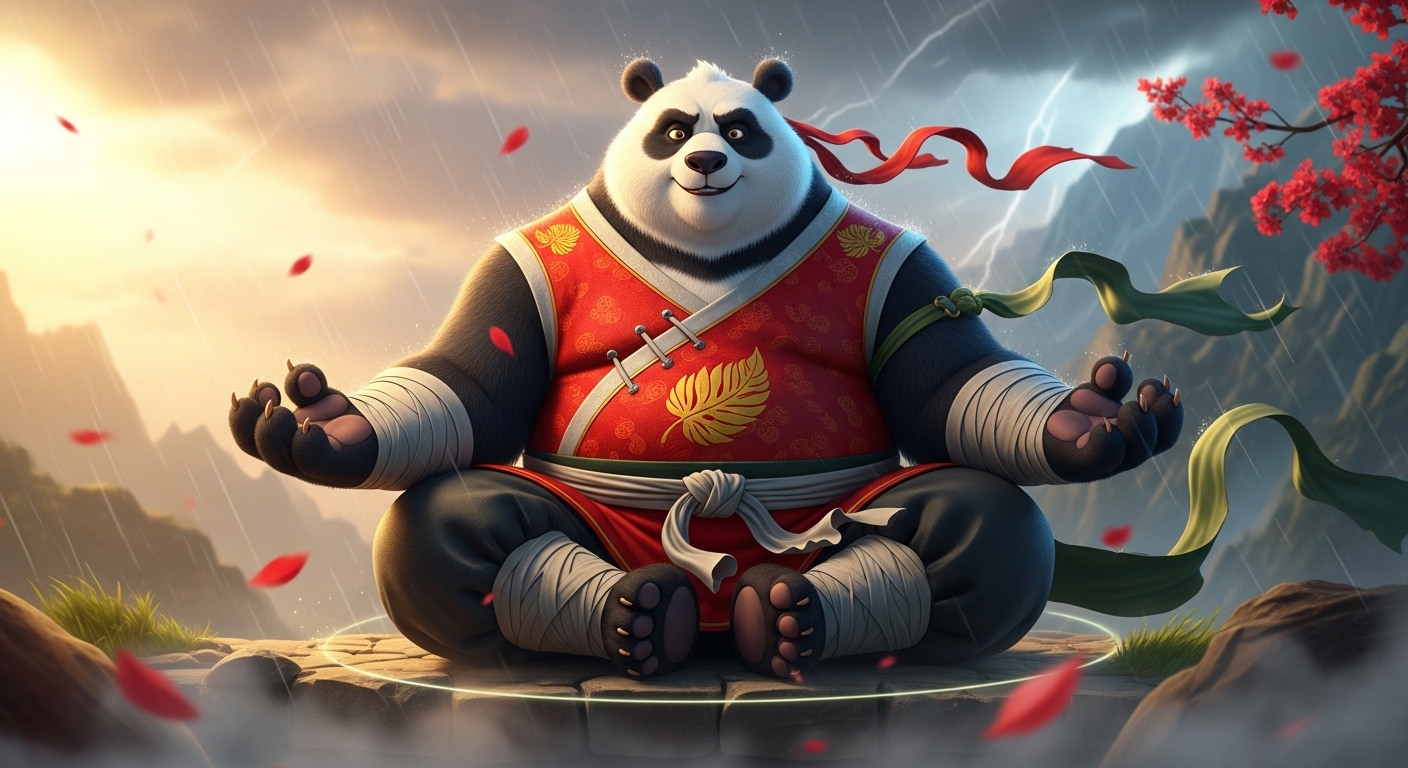
  • Inner Peace Is Not the Absence of Storm, But Stillness Within It

    Inner Peace Is Not the Absence of Storm, But Stillness Within It

    Real peace is not a quiet room — it is an unshakable center you carry into every loud, chaotic, demanding corner of your life.

    Rethinking What Peace Means

    Most people chase peace like a destination — a beach, a retreat, a weekend with the phone off. But the moment real life returns, the peace evaporates. This is the first great misunderstanding of the path. Peace is not the scenery around you. It is the posture within you. A master fighting for their life on a battlefield can have more peace than a tourist sunburning on a Sunday afternoon. Circumstance is the wind; peace is how deeply you have rooted.

    The Ancient Principle

    The old scrolls describe the mind as a pond. When the surface is still, every ripple is visible. When the pond itself is churning, nothing can be read. But — and this is the key — the depth of the pond never changes. The turbulence is always only on the surface. Your task is not to prevent the wind. It is to remember that you are the water underneath, not the waves on top.

    A Practice for This Week

    Each morning, before your feet touch the floor, sit up and take three slow breaths with your eyes closed. Notice — without trying to fix — whatever weather is already inside you. Tired? Anxious? Sharp? Blunt? The practice is not to change the weather. It is to become the one who can observe the weather. This tiny act, repeated, rewires your relationship with chaos.

    The Deeper Truth

    The warrior who finds peace only in silence has found half the prize. The warrior who can find it in the middle of a storm has found the whole one. Stillness is not the absence of motion. It is the stability from which all skilled motion flows. Build that center, and you will stop searching for peaceful places — you will bring peace with you.

    This article is offered for reflection and self-study. The Way is walked, not read — take what resonates, test it in your own practice, and leave the rest.