
Category: Discipline

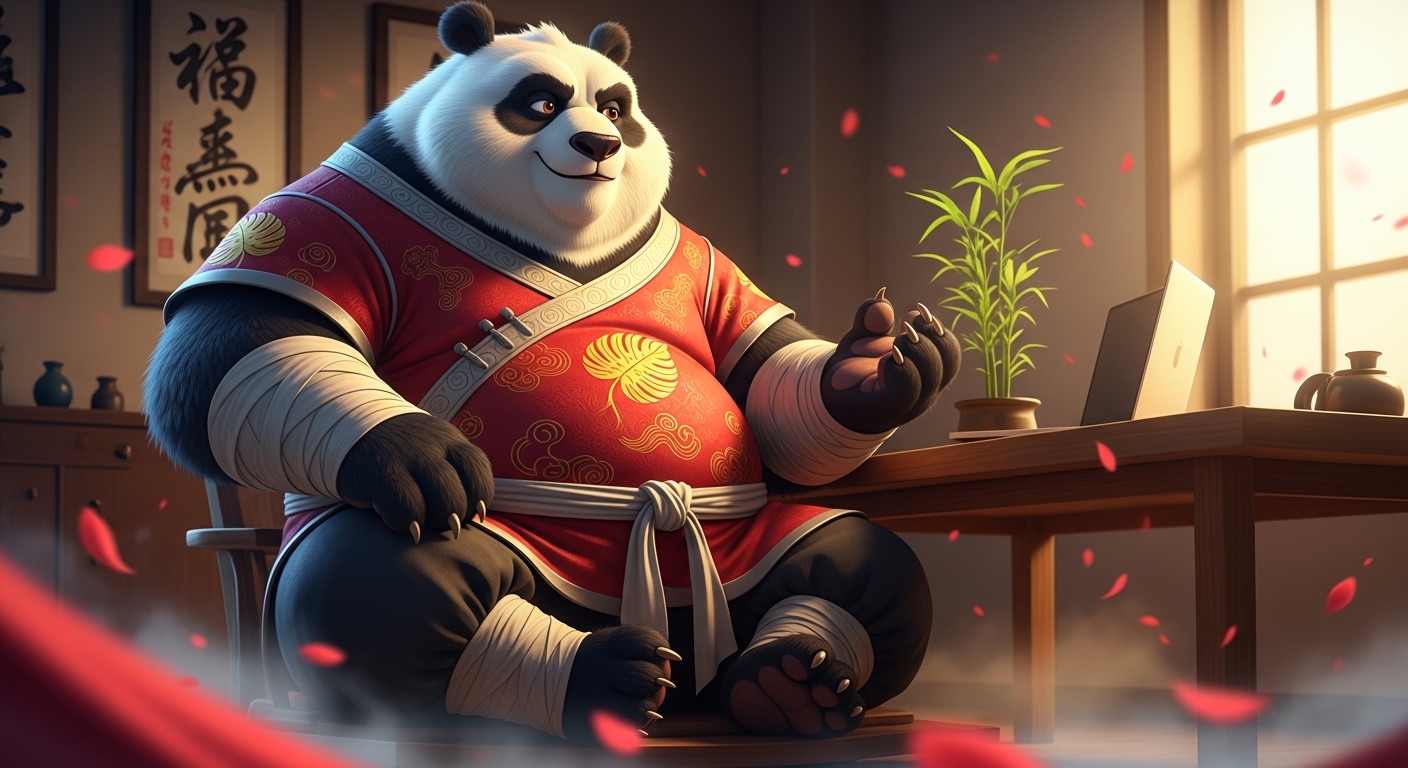
  • How to Bring Dojo Discipline Into Your 9-to-5 Workweek

    How to Bring Dojo Discipline Into Your 9-to-5 Workweek

    A practical protocol for translating the habits of the training hall into the realities of a cubicle, laptop, or kitchen table.

    The Core Translation

    The dojo and the office do not look alike, but their underlying skills rhyme. The dojo rewards presence, repetition, cleanliness of form, and the ability to begin again after every failure. The office rewards exactly the same qualities, minus the uniforms and ritual bows. Most people fail at work for the same reasons they would fail at a martial art — they chase novelty, avoid repetition, and drop the practice the moment it gets boring. The fix is identical. Bring dojo habits to your workday. The results are unfair.

    The Six-Point Protocol

    First, one uniform — a consistent morning routine that signals work has begun. Second, one bow — a one-minute meditation at your desk before the first task, to arrive fully. Third, one form — a fixed sequence of opening tasks in the same order every day, to bypass willpower. Fourth, one opponent — one hard task per day, tackled before anything easy. Fifth, one break — one real lunch, away from screens, every single day. Sixth, one bow out — a close-down ritual that formally ends the day. Six small disciplines. Weeks of compounding.

    Why It Actually Works

    The reason corporate advice fails is that it does not train the nervous system; it only gives the conscious mind more to-do lists. Dojo habits work because they teach the body to associate certain rituals with certain states. Your morning routine triggers work mode, just as a gi triggers training mode. Your close-down ritual triggers rest, just as a bow out ends the session. Over weeks, you stop needing willpower because the environment itself is doing the work. That is the whole secret.

    Starting This Week

    Pick two of the six points above and install them this week. Just two. Write them down. Do them without exception for five workdays. Notice what happens to your focus, your energy, and your ability to stop thinking about work in the evening. Next week, add one more. By the end of a month, you will have a workday with the structure of a training session — and the output difference between a structured week and an unstructured one will, quite quickly, stop being subtle.

    This article is offered for reflection and self-study. The Way is walked, not read — take what resonates, test it in your own practice, and leave the rest.


  • The Forgotten Art of the Iron Palm — and Its Lessons for Grit

    The Forgotten Art of the Iron Palm — and Its Lessons for Grit

    A conditioning practice nearly lost to time, and what it teaches about patience, pain, and the willingness to suffer well.

    What Iron Palm Actually Was

    Iron Palm was a conditioning discipline in which practitioners, over years, struck bags of progressively harder materials — mung beans, then rice, then pebbles, then iron shot — to harden the bones and connective tissue of the hand. Done poorly, it destroyed joints and shortened careers. Done correctly, over a decade, it produced hands that could break stone. It is nearly extinct now, and with it has gone something the modern world could use — a framework for relating to pain as a teacher, not an enemy.

    The Core Teaching Underneath the Technique

    The point was never the breaking of bricks. The point was the patient, daily, slightly uncomfortable exposure to a force that would, left alone, destroy you. The hand learned to become the kind of thing that does not break. And the mind, quietly, learned the same lesson. Iron Palm was an apprenticeship in suffering small amounts well enough that large amounts later became survivable. That is a skill almost nobody is taught anymore.

    A Modern Translation

    You do not need to bruise your hands against iron shot. But you can apply the principle. Cold showers. Early mornings. Hard conversations you keep postponing. The workout at the edge of your capacity. Each one is a modern mung bean bag. You expose yourself to a small, controlled discomfort, repeatedly, on purpose. Over months the discomfort becomes familiar, and familiarity is what separates the person who panics from the one who steadies. Build that.

    The Prize at the End

    The prize of Iron Palm was never the hand. It was the person who had spent a decade staying with discomfort instead of fleeing it. That person had developed a relationship with their own limits that could not be unlearned. You will not take a decade; you do not need to. But give it a season of deliberate, small suffering, and you will notice something change. The things that used to knock you over will begin to move through you instead. That is the real iron you are forging, and it is not in your hand.

    This article is offered for reflection and self-study. The Way is walked, not read — take what resonates, test it in your own practice, and leave the rest.

  • Discipline Is the Bridge Between Dreams and the Dojo Floor

    Discipline Is the Bridge Between Dreams and the Dojo Floor

    Everyone can have a dream at midnight. Fewer can have it again at 5 a.m. when the floor is cold. This is the whole secret.

    The Gap Between Wanting and Getting

    There is a gap between wanting to be skilled and actually being skilled, and the name of that gap is discipline. It is not talent; talent determines your ceiling. It is not motivation; motivation is weather. Discipline is the architecture that keeps you showing up after the talent has plateaued and the motivation has evaporated. Every master you admire built their entire career on this one thing, and most of them will tell you so if you ask.

    Why Motivation Fails

    Motivation is an emotional state. Emotions are weather patterns. You do not build weatherproof structures on weather. You build them on stone. Discipline is the stone. It says: the reps happen on the days you feel like it and the days you do not, and that is the entire distinction. The person who trained only when inspired will be outrun, within five years, by the person who trained because it was Tuesday and Tuesdays are for training. That person will seem, to outsiders, lucky.

    How to Build It

    Do not try to become a disciplined person in general. Pick one practice, absurdly small, and refuse to miss it. Twenty pushups. Ten minutes of reading. One page of writing. Keep the size below the threshold where your resistance wakes up. Over months, the act becomes automatic, and automaticity is the goal. Then you can stack. Another small promise. Another. A disciplined life is not built in a weekend. It is accreted, one tiny kept promise at a time.

    The Long Game

    Five years in, your discipline will look ordinary to outsiders and miraculous to you. Ordinary because the acts themselves are small. Miraculous because they have, in aggregate, made you into someone you used to only fantasize about being. That is the bridge. One plank at a time, laid in the dark, most of them uncelebrated. Walk it anyway. There is no other route to the dojo the dream lives in.

    This article is offered for reflection and self-study. The Way is walked, not read — take what resonates, test it in your own practice, and leave the rest.

  • 10,000 Kicks: Why Repetition Is the Secret to Mastery

    10,000 Kicks: Why Repetition Is the Secret to Mastery

    Bruce Lee said he did not fear the man who practiced 10,000 kicks once — he feared the man who practiced one kick 10,000 times.

    The Quote Everyone Knows and Misunderstands

    The quote gets repeated in every gym, but most people stop at the slogan. The deeper point is this: mastery is not a collection of techniques. It is the depth of a single movement pattern repeated enough times that it becomes indistinguishable from the person performing it. A beginner with ten kicks is a tourist. A veteran with one kick, drilled ten thousand times, is a specialist. And specialists, in real life, beat tourists every time.

    What Repetition Actually Builds

    The surface thing repetition builds is technique — yes, the alignment, the timing, the reach. But beneath that, it builds something more important: a nervous system that no longer has to think. In the high-stress moment — a fight, a deadline, a hard conversation — your cortex goes offline. What remains is whatever you have trained into your body and below. Repetition is the only currency that buys you access to that layer. Books, courses, and weekend seminars cannot.

    How to Practice Without Going Insane

    Repetition without awareness is just mileage on a broken machine. You need three conditions: first, a specific goal within the movement — not ‘do a kick’ but ‘chamber higher, contact tighter.’ Second, slow tempo for the first portion, to groove alignment before speed corrupts it. Third, rest between sets so the nervous system can lock in what it just learned. One hundred good reps with attention beat one thousand lazy ones with none. Quality of attention is the multiplier.

    The Lesson for Everything Else

    This is not just kung fu. Writers. Coders. Musicians. Surgeons. Every master you have ever met has one thing in common: they did one thing more times than anyone else was willing to. If you want to get good at something, pick fewer things and repeat them further. Ten thousand is not a literal number. It is a way of saying — long past the point where it stopped being interesting. The interesting part is on the other side of the repetitions.

    This article is offered for reflection and self-study. The Way is walked, not read — take what resonates, test it in your own practice, and leave the rest.